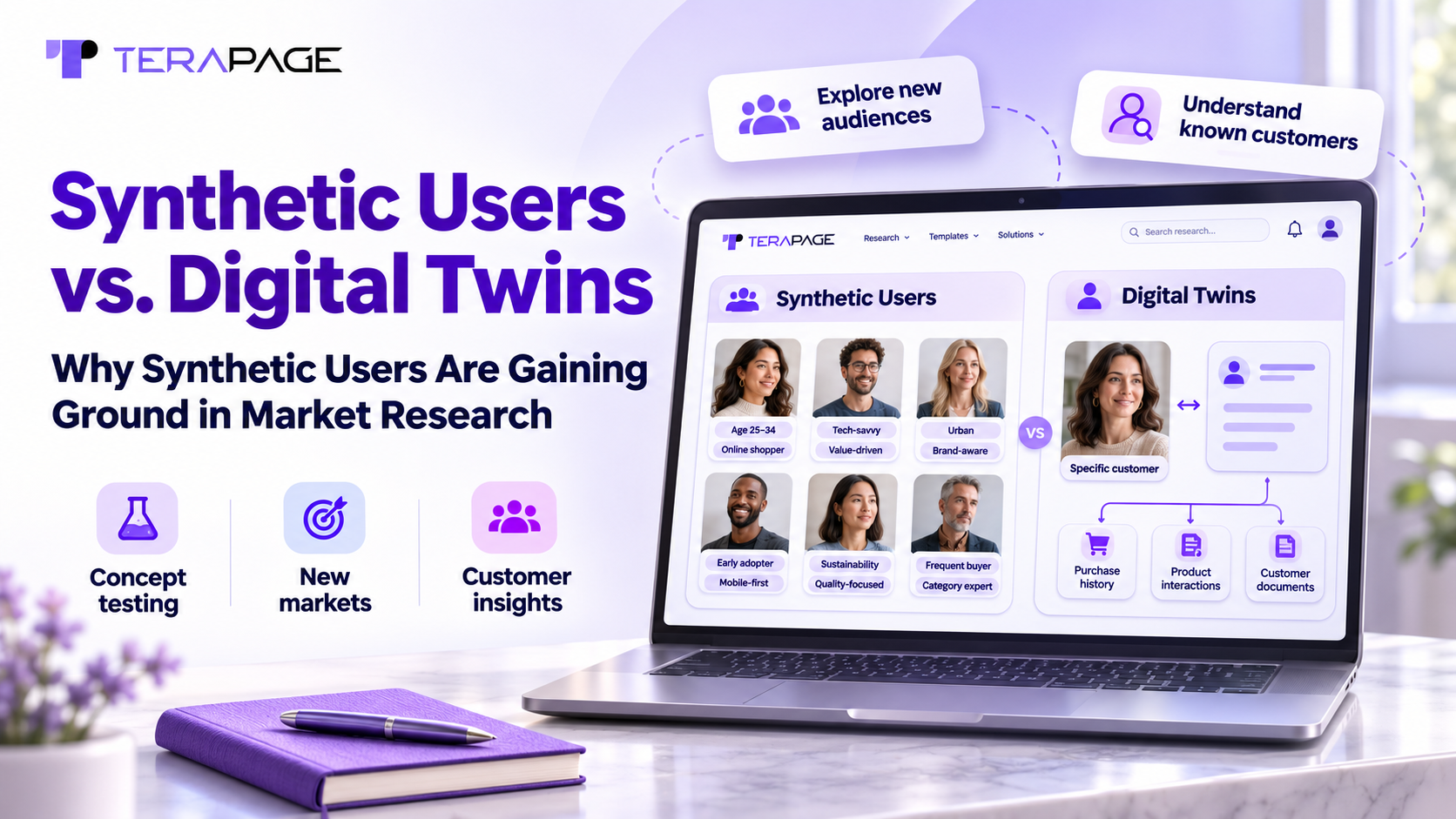
Synthetic Users vs. Digital Twins: Why Synthetic Users Are Gaining Ground in Market Research
Key takeaways
- Synthetic users are independent AI personas built from selected attributes; a digital twin is an AI copy of one real person, built from that person’s own data.
- A digital twin asks “what would this customer do?”, while a synthetic user asks “what would this kind of customer do?”
- Synthetic users win on speed, scale, diversity, new products, privacy and cost, because they need no personal data and no recruitment.
- In a real Terapage study, 20 synthetic shoppers kept a week-long journal about a brand-new AI shopping assistant that had no real users to copy.
- Use digital twins to go deeper with customers you know, synthetic users to explore people you haven’t met, and validate key findings with real people.
Every product, retail and finance team now faces the same research problem. They need answers from diverse audiences before a launch, a campaign or a price change, but recruiting real participants across cities, ages and incomes can take weeks. Digital twins promise a shortcut, yet each twin still needs months of one real person’s data before it can answer a single question.
That’s why more research teams are turning to synthetic users, AI personas that represent realistic consumers without copying anyone real. With Terapage Synthetic Users, you can build a diverse synthetic audience in minutes and test ideas the same day. In this guide, we explain how synthetic users and digital twins differ and show, with a real study, why synthetic users are gaining ground.
What Are Synthetic Users?
Synthetic users are independent AI personas created from synthetic data and selected attributes such as age, location, income, habits and personality. They are not copies of real people, and they respond to research questions the way a realistic consumer with those traits would.
Groups of synthetic users form synthetic audiences, and each individual profile within them is a synthetic persona. Researchers choose the attributes, and AI creates a varied group that reflects the target market. Learn the basics in our guide to synthetic data for researchers, or see how behavioural and psychological attributes make synthetic personas more realistic.

What Is a Digital Twin in Market Research?
A digital twin is an AI copy of one real person, built from that person’s own data. IBM describes a digital twin as a virtual representation of an object or system that is updated with real-time data.
Think of it this way: a digital twin of you would think and shop like you. It would know your favourite brands, your usual budget and the time you normally order groceries, because it learned all of this from your real purchases, survey answers and behaviour.
This makes digital twins powerful for studying known customers in depth, but every twin needs a real person behind it. McKinsey notes that digital twins depend on rich, connected data to stay accurate.
Synthetic Users vs. Digital Twins: What’s the Difference?
Synthetic users and digital twins both use AI to stand in for consumers, so they are often treated as the same thing. They are not interchangeable, because they start from different places and answer different research questions. A digital twin asks “what would this customer do?”, while a synthetic user asks “what would this kind of customer do?”
| Research factor | Synthetic users | Digital twins |
|---|---|---|
| Who it represents | A realistic profile, such as a budget-conscious parent in Texas, who is not one real person | A specific customer who already exists in your CRM or panel |
| Where it starts | A research brief, ready-made research templates and a mix of attributes you choose | Months of one person’s purchases, survey answers and app activity |
| Time to first insight | Same day, as personas are ready in minutes and respond straight away | Weeks or months, because data must be collected and connected first through data integrations |
| Sample size | Grows with one setting, from 20 personas today to 200 tomorrow | Grows one real person at a time, each needing their own data |
| New markets and segments | Can explore a city, age group or lifestyle you have never sold to, from technology and telecoms to healthcare | Can’t model people you hold no data for |
| Products not yet launched | Can react to a concept, prototype or app with zero users | Relies on past behaviour, so it struggles with something completely new |
| Personal data | None, as personas are built from attributes, not individuals | Detailed personal data, which raises consent and data privacy questions |
| Cost | Low, using AI credits instead of recruitment fees and incentives | High, with ongoing data collection and upkeep |
| Accuracy depends on | How well the attributes and context files reflect the real market, supported by transparent AI | How complete and up to date the person’s data is |
| Best fit in the research cycle | Early stages: exploring ideas, screening concepts and shaping questions before participant recruitment | Later stages: predicting how loyal or high-value customers respond to a change |
| Biggest risk | Plausible answers that drift from reality if never validated with real people | Outdated data that makes the twin behave like the customer used to, not as they do now |
In short, digital twins help you understand the customers you already know, and synthetic users help you explore the ones you haven’t met yet.
Why Are Synthetic Users Gaining Ground in Market Research?
Most research questions are about people a brand doesn’t fully know yet. A digital twin can only answer for customers already in the data, while synthetic users can answer for anyone you can describe. Here is why more teams are choosing them.
- Speed: Synthetic personas are ready the same day, helping enterprise teams and research agencies meet launch deadlines.
- Scale: Synthetic audiences grow from 20 to 200 personas with one setting, making larger qualitative and quantitative studies easy.
- Diversity: Synthetic users reach new audiences across consumer goods, financial services and the public sector.
- New products: Synthetic users can test ideas with no real customers yet, ideal for concept evaluation and product testing and de-risking a launch.
- Privacy: Synthetic personas are built from attributes, not real people, on a secure, compliant platform.
- Cost: No recruitment or incentives to pay, so check the incentive calculator and test ideas within your plan.
How We Built Synthetic Users for an AI Shopping Assistant Study
To put these advantages to the test, we ran an open journal study on Terapage called the AI Shopping Assistant Adoption Study. Synthetic shoppers across the US were created for the study and recorded their experience over a week. Here is how the study was built in four steps.
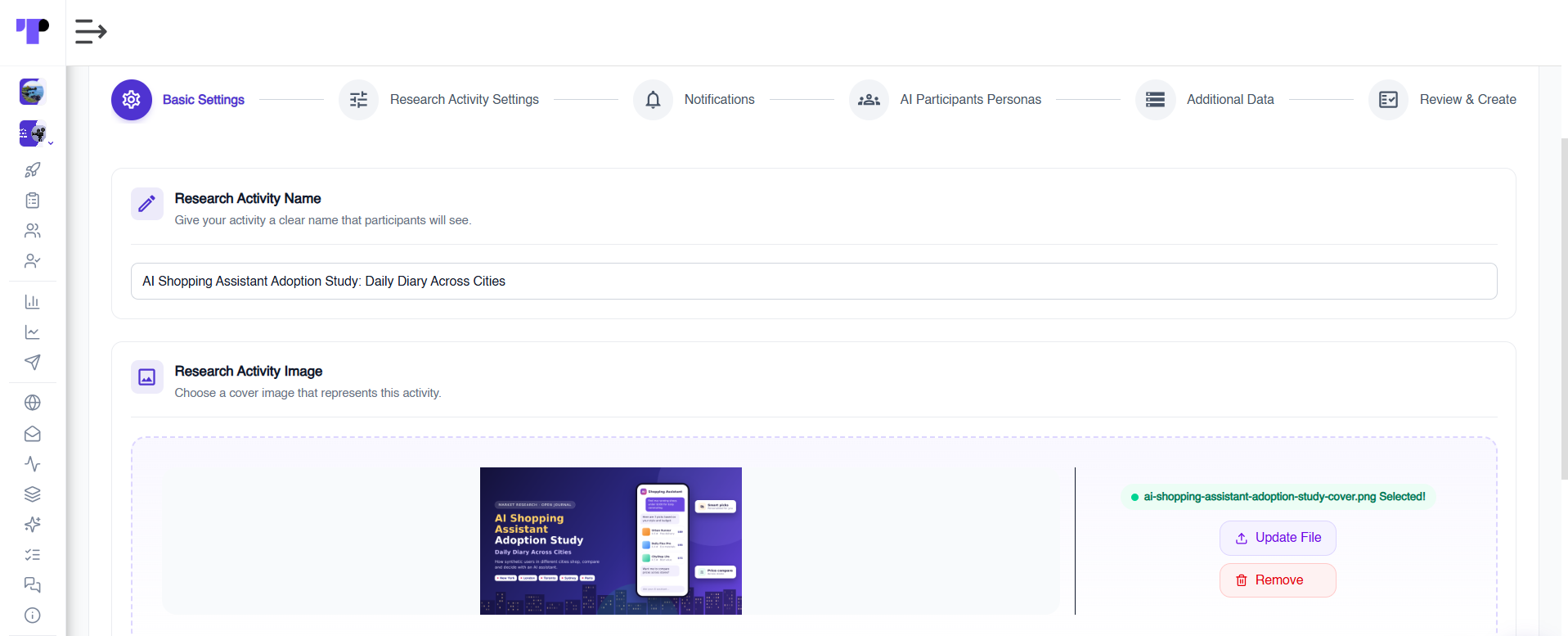
Step 1: Set Up the Study
We named the study and added a cover image, then described the research in plain language. AI turned that short description into a full study set-up, including the journal questions, which we could edit before moving on.

Step 2: Build the Synthetic Audience
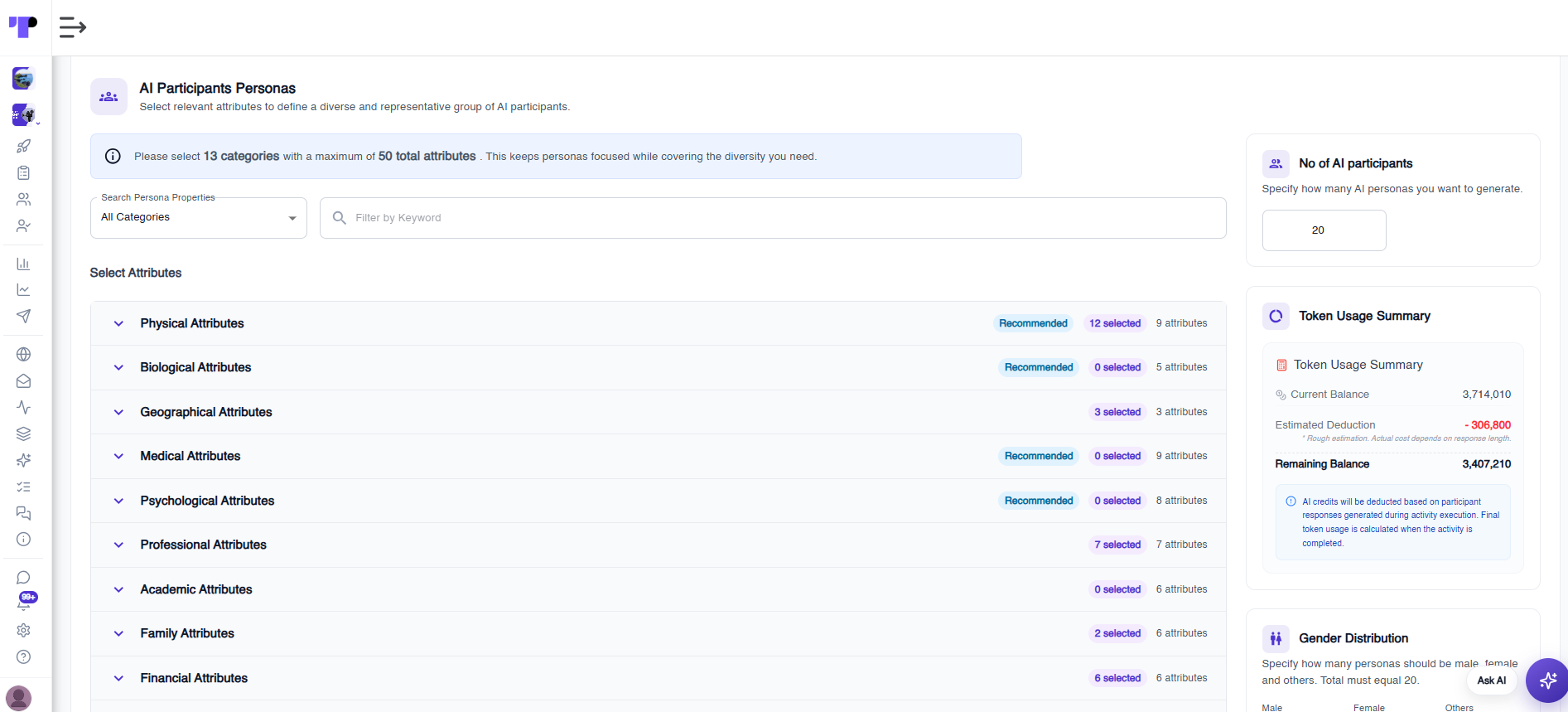
Next, we chose who the synthetic users should be. Terapage offers 13 attribute categories, from demographics and location to lifestyle and personality, so the synthetic audience reflects a realistic mix of US shoppers rather than one average customer.
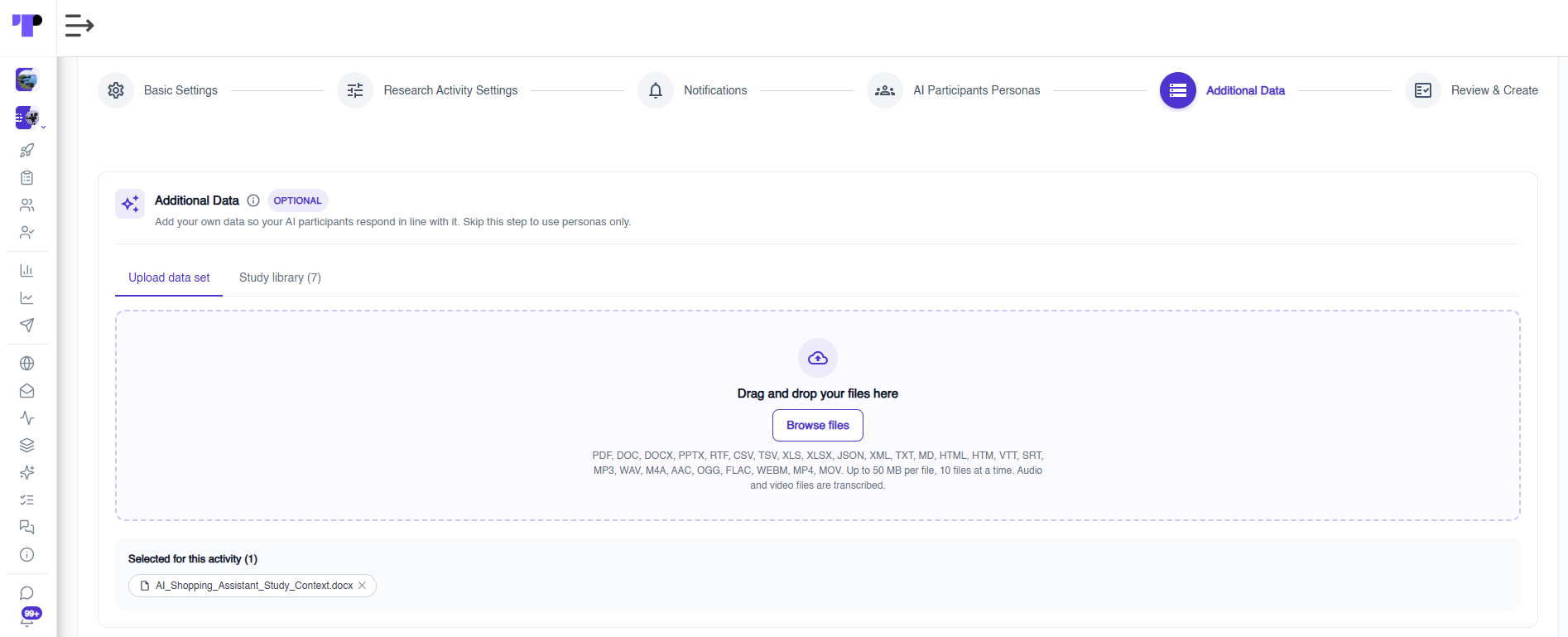
Step 3: Ground Synthetic Personas With Study Data, Not Personal Data
Instead of feeding in real customer records, as a digital twin would need, we uploaded a study context file describing the app, its features, pricing and the shopping situations to explore. This keeps responses realistic without copying anyone’s personal data.
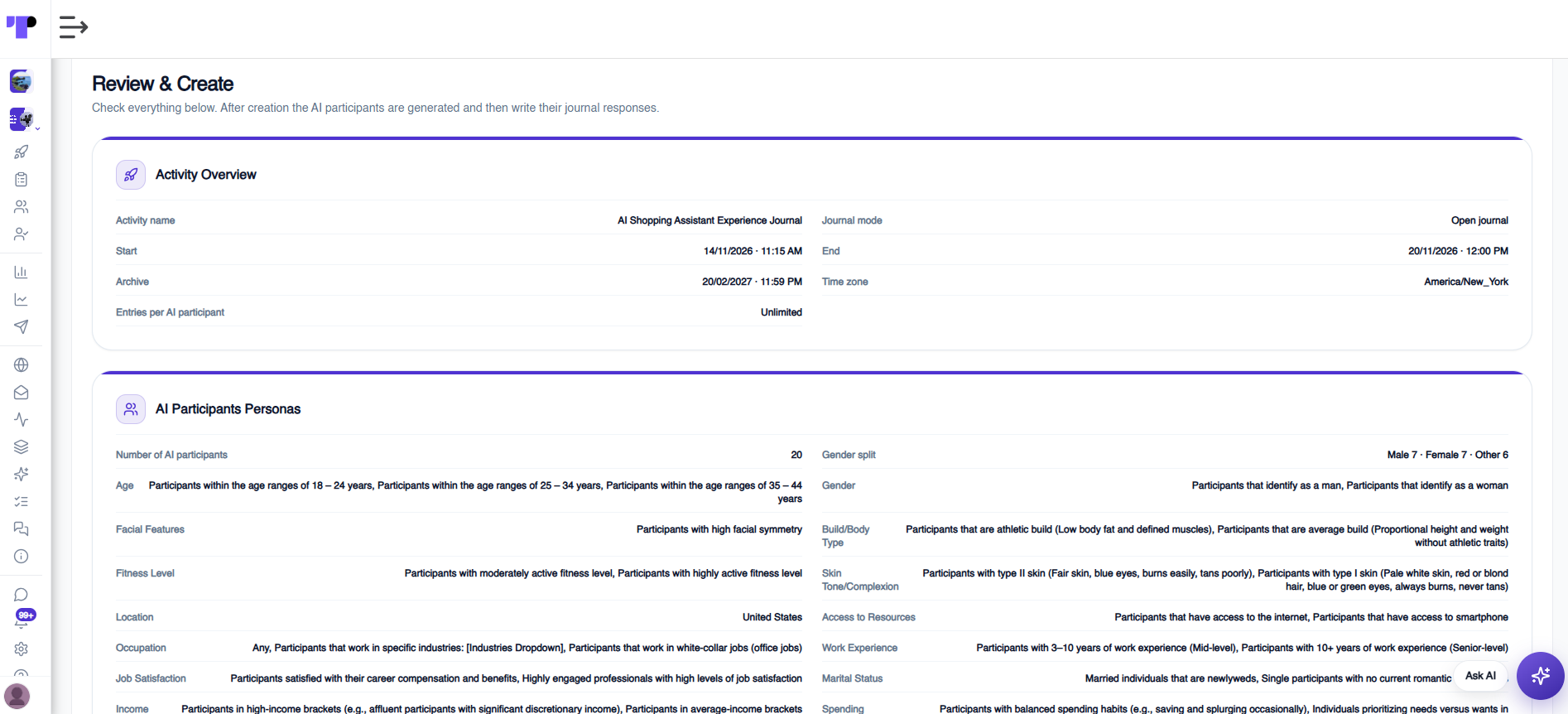
Step 4: Review and Launch
Finally, we reviewed the full set-up, from activity details to persona attributes, and launched the study. With no participants to invite, the synthetic personas started responding straight away.

Testing a Product With No Real Customers
This is the situation where digital twins can’t help. The AI shopping assistant in our study was brand new and had no real users, so there was no one to copy. Synthetic users, however, could still show how it might fit into everyday life, from comparing prices to deciding which brands to trust.
Tracking Synthetic Users Through a Week-Long Journal
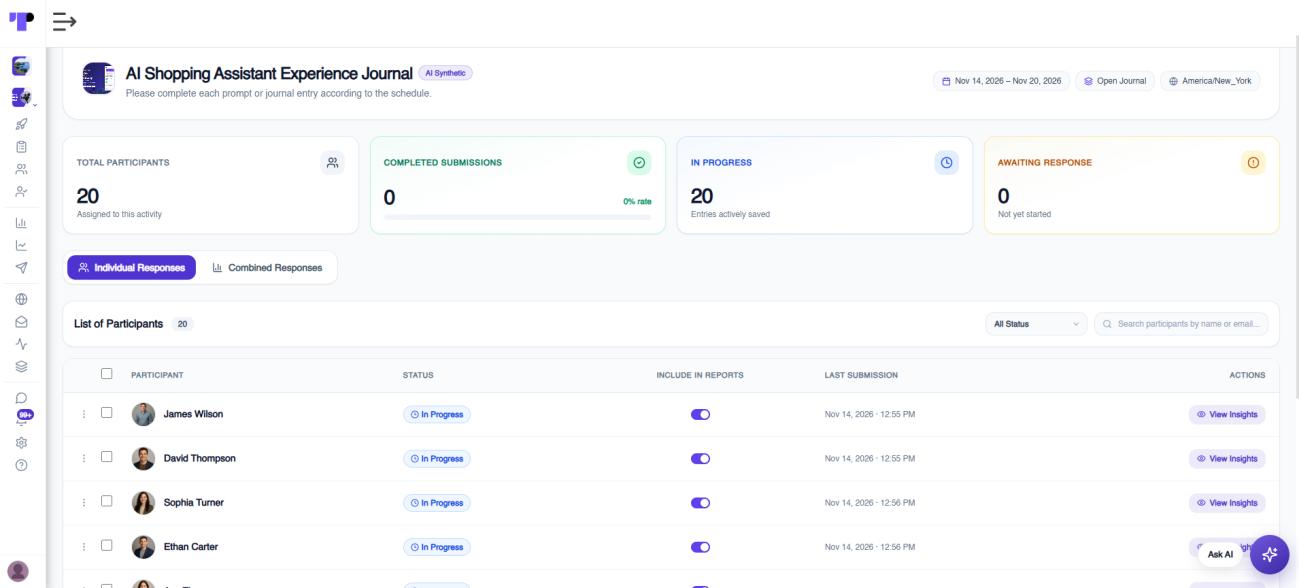
All 20 synthetic users were tracked in one dashboard, with their status and latest submissions visible in one place. There were no scheduling reminders, drop-outs or missed entries to chase.
Daily Entries in Text, Photos, Video and Voice
Just like real participants, synthetic users recorded shopping moments in written diaries and shared photo, video and voice responses. By the end of the week, the study held 60 media files alongside the written entries.


What Synthetic Users Revealed About AI Shopping Assistants
Terapage’s AI-powered insights turned a week of synthetic entries into sentiment, topics and themes within minutes. This early view of adoption is the kind of input that helps teams build products people will buy.
How Did Synthetic Users Feel About AI Recommendations?
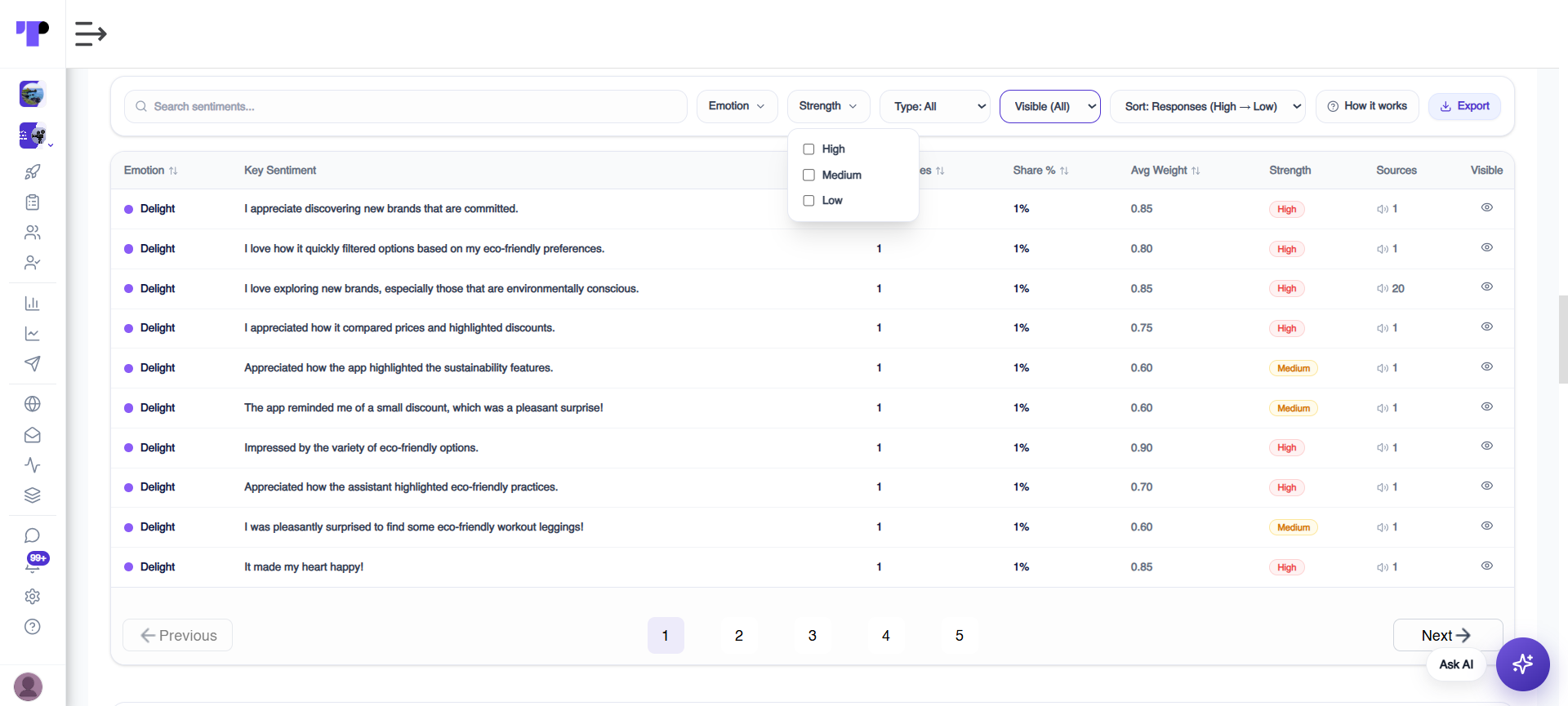
Sentiment analysis groups responses by mood and shows how strong each feeling is. Feelings were mostly positive, led by satisfaction and excitement, and trust grew when the app filtered products by what shoppers cared about. A result this positive should still be checked with real shoppers.

What Mattered Most to Synthetic Shoppers?
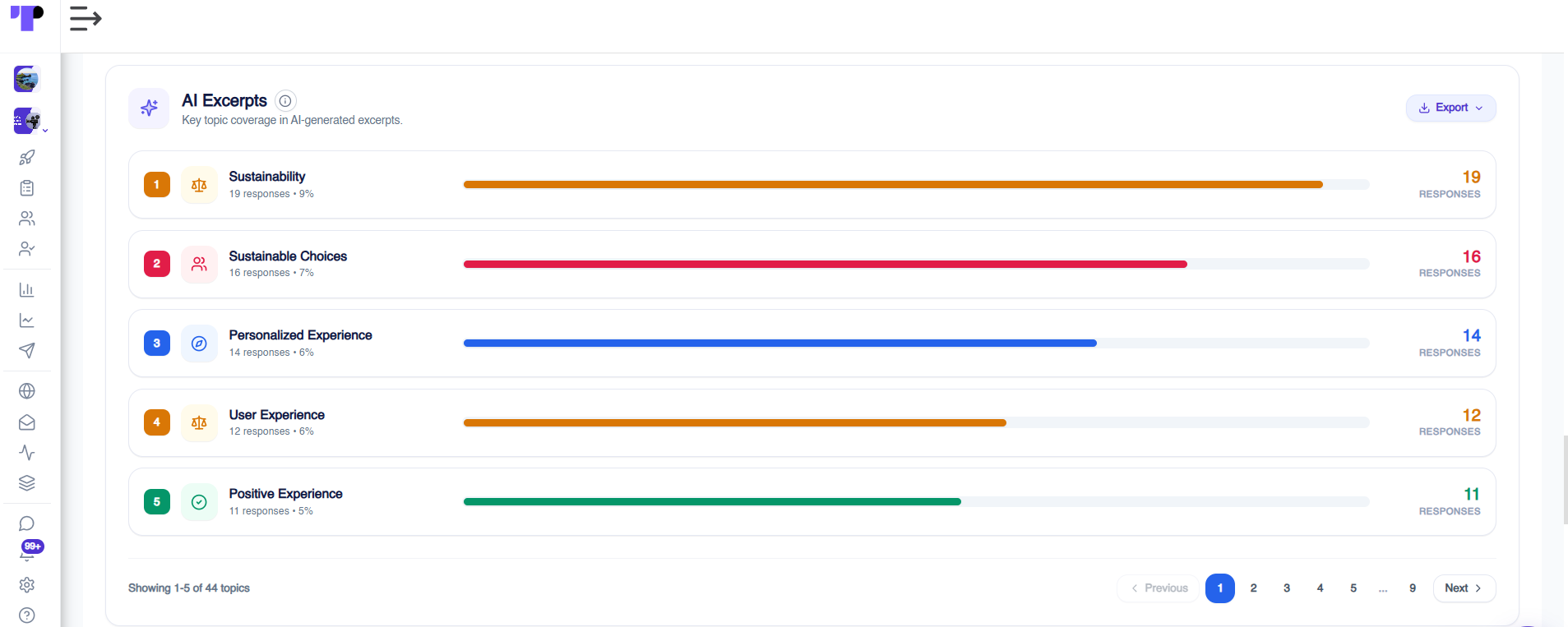
Synthetic shoppers valued brands that matched their values over the cheapest price, an early sign of the types of consumer insights that drive adoption.
The Themes Behind Trust and Adoption
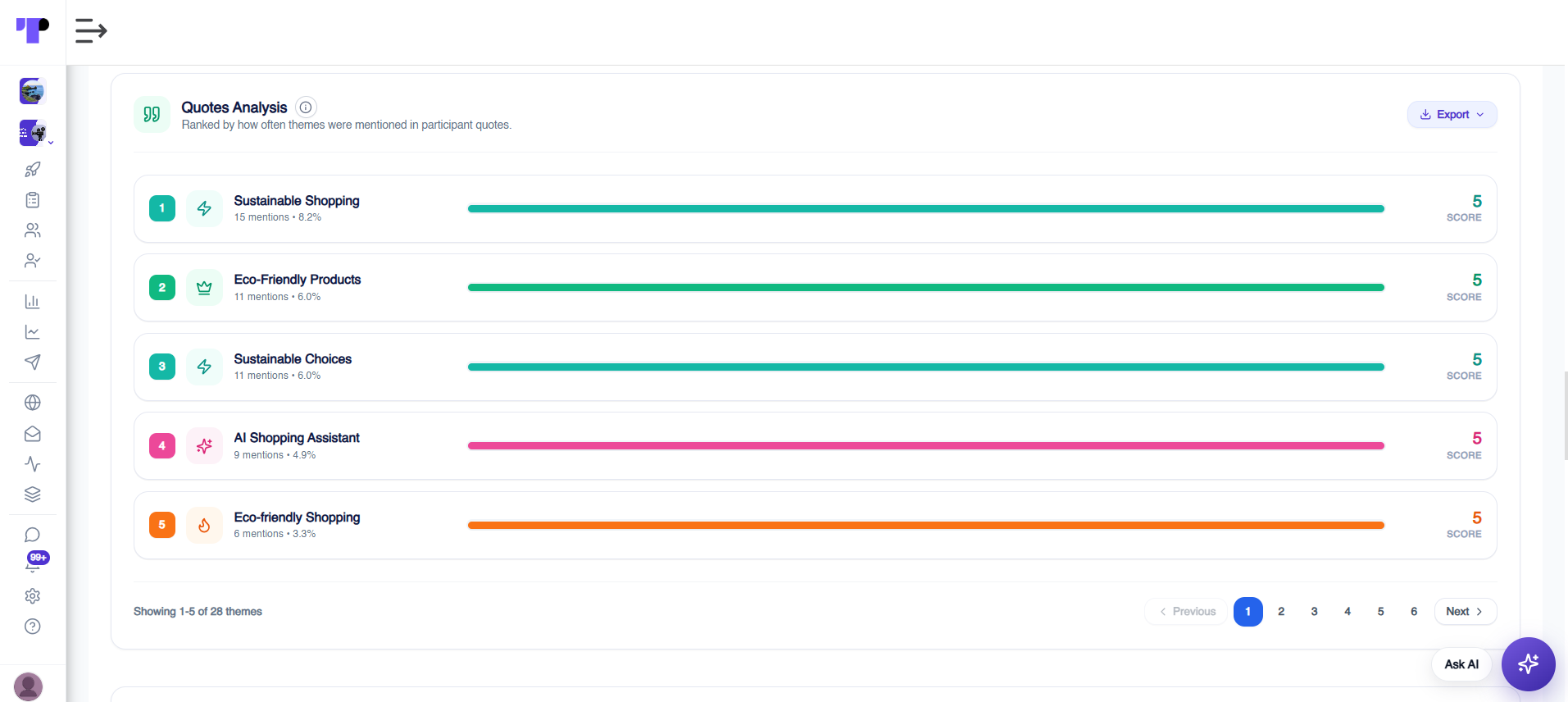
Quotes analysis ranks themes by how often they appear in synthetic users’ own words. Shoppers trusted the app when it helped them shop the way they already wanted to, a “why” that is hard to get from a digital twin and a natural next step for a consumer empathy study with real people.
Comparing Views Across Synthetic Audience Segments
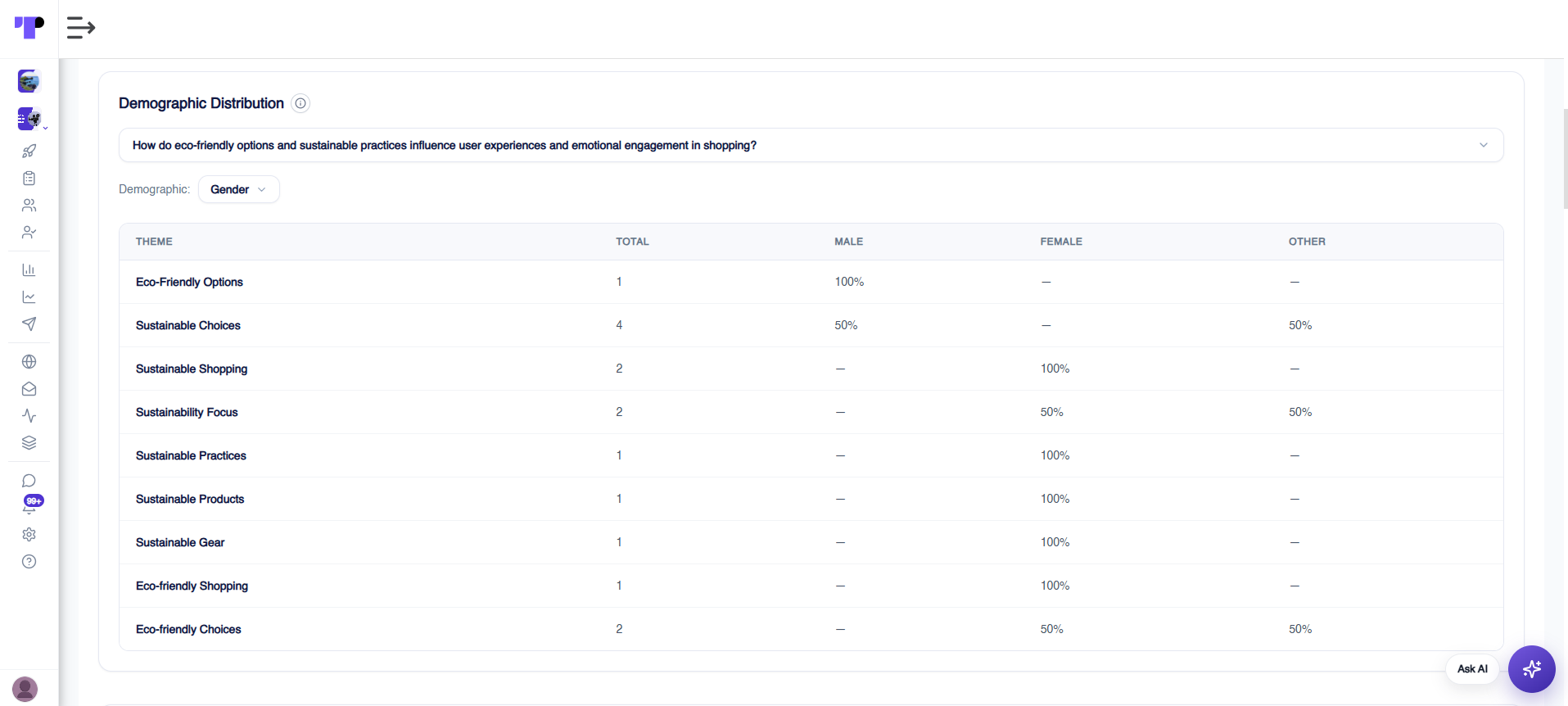
Demographic distribution shows whether a theme is shared across the whole synthetic audience or held mainly by one group. This helps researchers spot which segments to explore further before running real fieldwork.
The Words Synthetic Shoppers Used Most
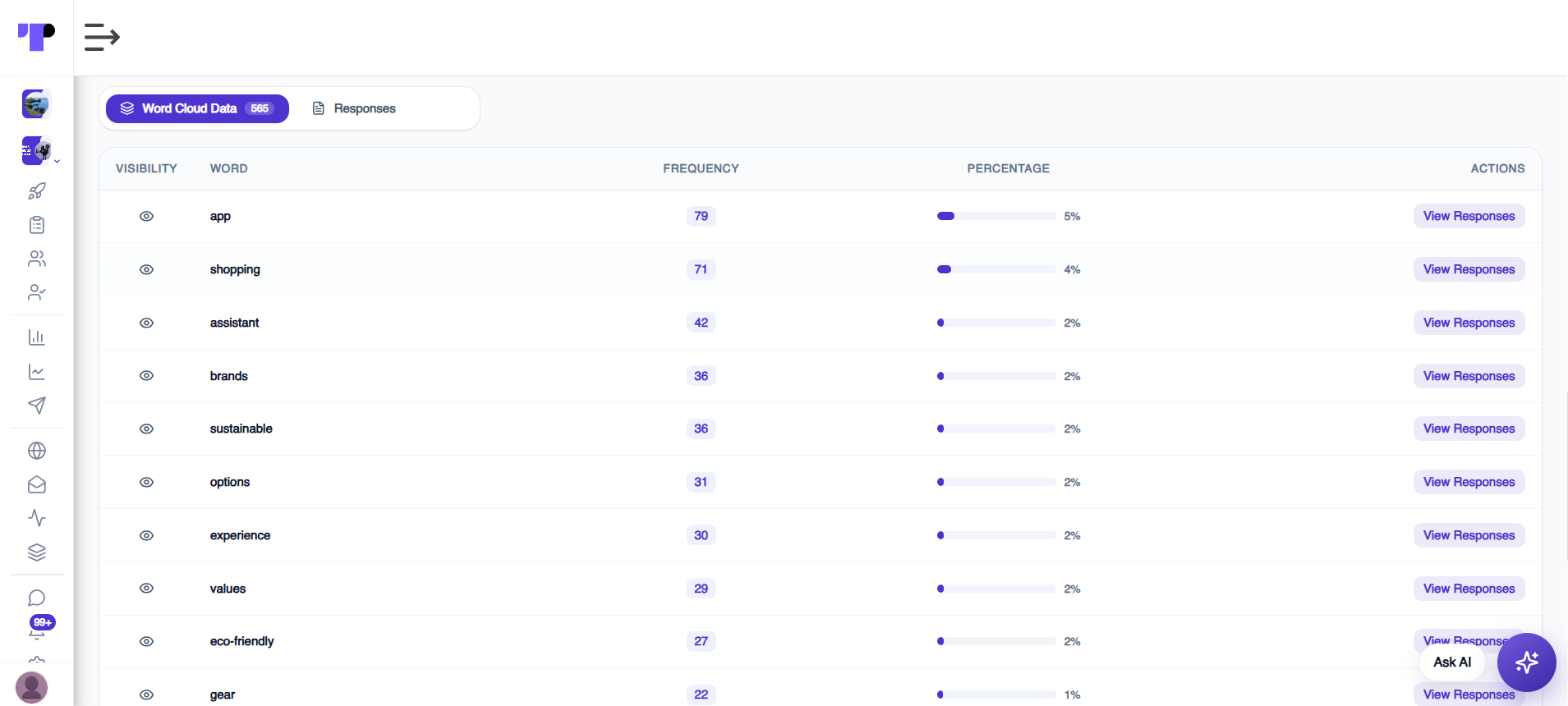
The word cloud shows the words synthetic shoppers used most, each linked back to its responses, so AI-driven data analysis is easy to check.

Limitations: Why Synthetic Users Don’t Replace Real Research
Synthetic users are best for exploring ideas, spotting patterns and narrowing options early. They can reflect bias in their training data and may miss real-world surprises, and a strongly positive result like ours is exactly the kind of finding to check with real shoppers.
That’s why key findings should be validated with real participants through hybrid research. Our framework for using synthetic data responsibly explains how to combine both.
When Should You Use Digital Twins vs. Synthetic Users?
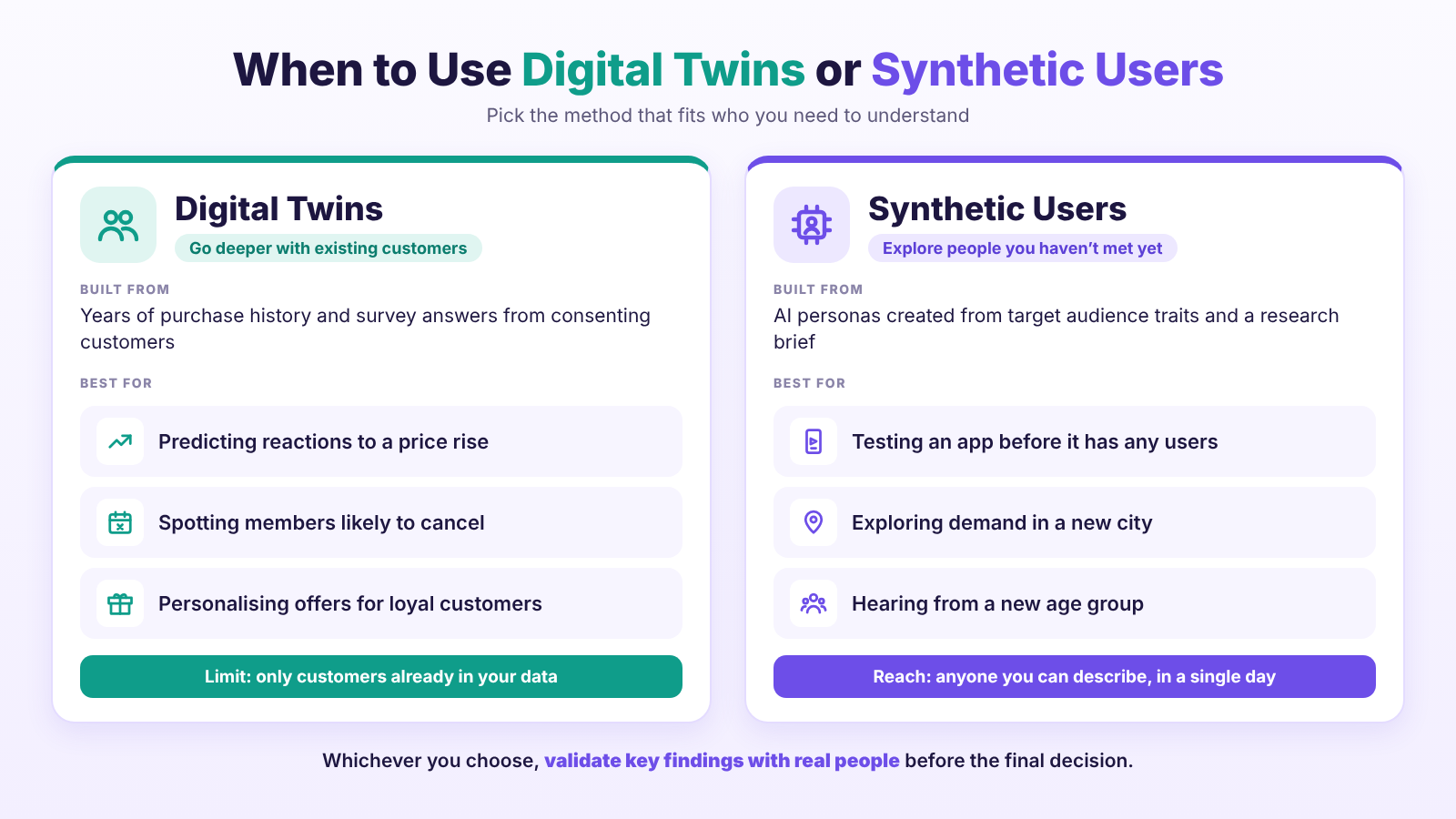
Digital twins help you go deeper with customers you already know. They are built from purchase history and survey answers from consenting customers, so they suit questions like how loyal subscribers will react to a price rise, which members might cancel, or which offers to personalise for your best customers. Their limit is that they only cover people already in your data.
Synthetic users help you explore people you haven’t met yet. They are AI personas built from target audience traits and a research brief, so they suit testing an app before it has users, exploring demand in a new city or hearing from a new age group. Synthetic audiences can represent anyone you can describe, and you can hear from them in a single day. Whichever you choose, validate key findings with real people before making the final decision.
Run Synthetic User Research on Terapage
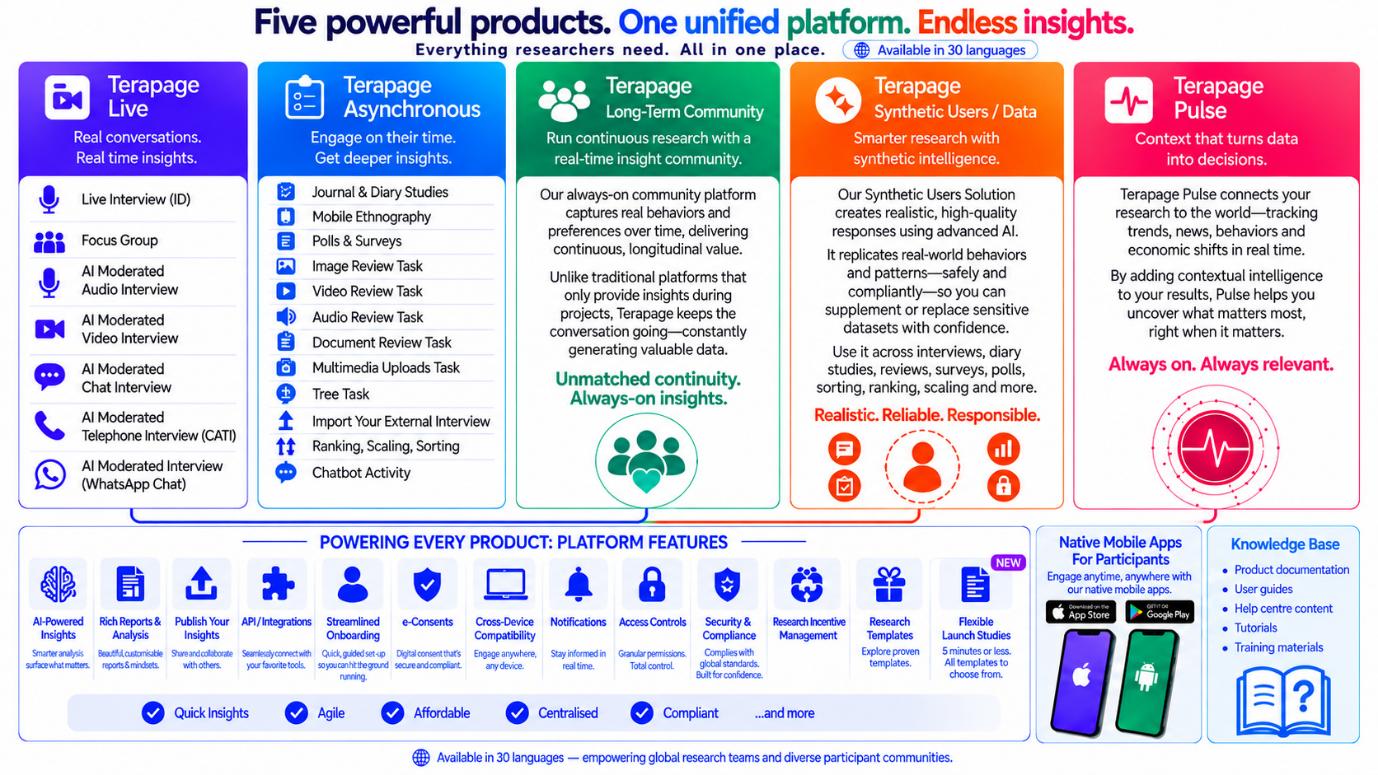
Terapage brings synthetic users and real participants together on one platform. Build synthetic audiences in minutes, run journals and AI-moderated interviews, analyse every response with AI-powered reporting, and move straight to real people or a long-term insight community when you are ready to validate.
Start your free trial or request a demo to run your first synthetic user study.
Ready to run your first synthetic user study?
No credit card required. Need help designing your study? Our Co-pilot Research Services team can help.