Beyond Demographics: How AI Builds Synthetic Consumers with Behavioural and Psychological Attributes
Key takeaways
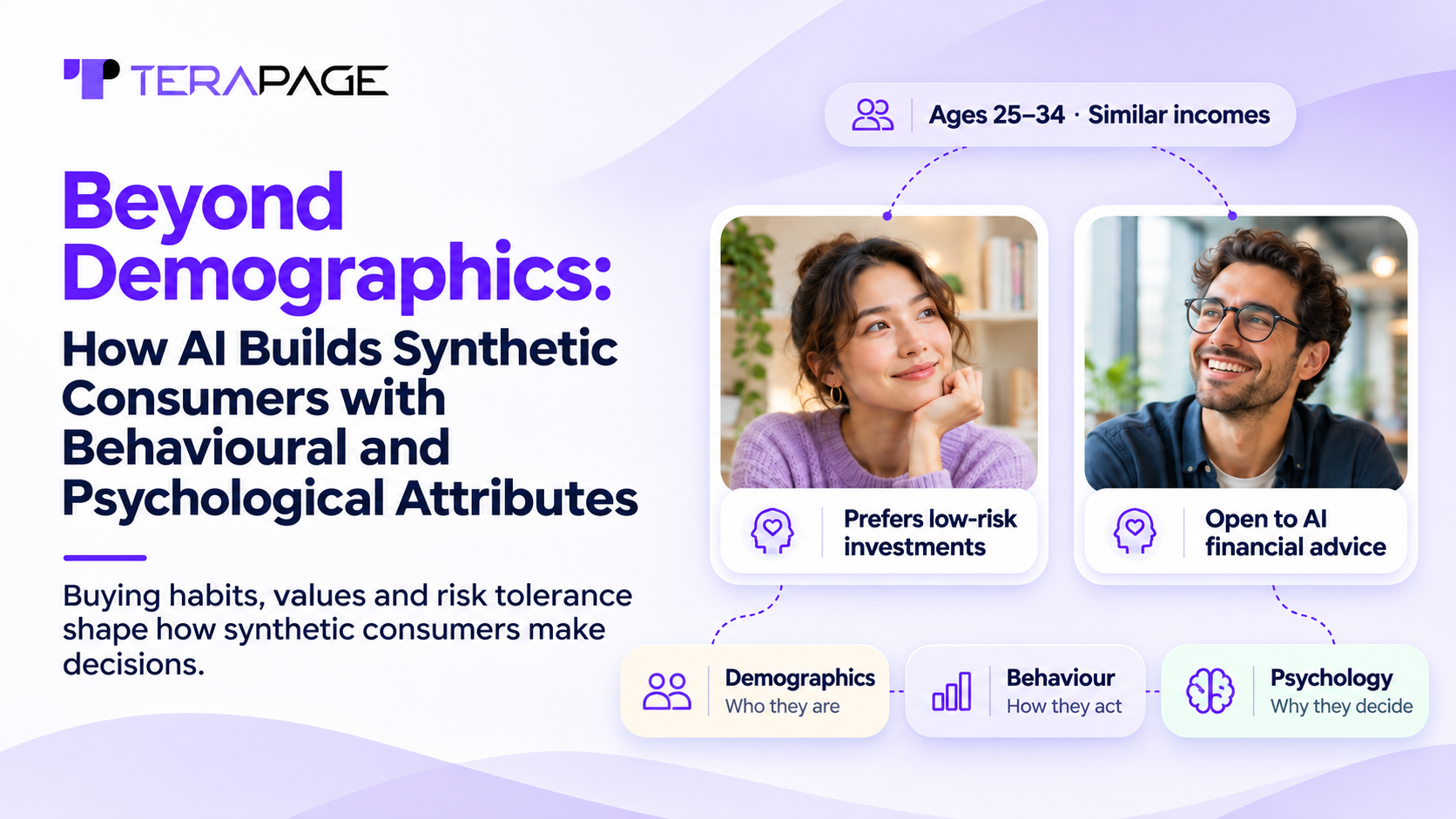
- Demographics show who a consumer is. Behavioural attributes show how they act, and psychological attributes show why they decide.
- A synthetic consumer is an AI-generated persona that combines demographic, behavioural and psychological traits into one realistic profile.
- On Terapage, researchers build AI personas from 13 attribute categories and can ground them with their own study data.
- In a 20-persona study, AI personas with the same age and income range made opposite decisions about risk, money and trust in AI.
- Synthetic consumers are a fast starting point. Important findings should still be validated with real participants.
Most market research still starts with the same question: who is our customer? Age, gender, income and location fill the persona slide, and product, marketing and insight teams build their decisions around it.
But consumers don’t buy because of their age bracket. They buy because of habits, values, trust, emotions and the small triggers that push them to say yes or walk away. Google’s research found that marketers who rely only on demographics risk missing more than 70% of potential mobile shoppers. In fact, 40% of baby product buyers live in households without children.
For researchers working with synthetic data, the gap is even bigger. An AI persona built only on demographics gives safe, average answers that sound like no real person. It can tell you who the consumer is, but not how they shop or why they decide.
The solution is to build synthetic consumers the way real people think. With Terapage Synthetic Users, researchers can add behavioural and psychological attributes, such as buying habits, motivations, values and personality traits, to every AI persona. The result is synthetic feedback that reflects real decision-making, so teams can test ideas with more confidence before going to market.
What Is a Synthetic Consumer?
A synthetic consumer is an AI-generated persona built from synthetic data that represents one realistic buyer, combining their demographics, behaviours and psychological traits into a single profile that can respond to research questions the way a real person would.
Instead of recruiting real participants for every early test, researchers can create AI personas that reflect their target audience and explore reactions to ideas, messages or products. You can learn the basics in our guide to synthetic data for researchers.
A synthetic consumer is different from a synthetic audience. An audience is the whole group, while a synthetic consumer is one detailed, decision-making profile within it. The more realistic each consumer is, the more useful the audience becomes.
The Three Layers of a Realistic Synthetic Consumer
A realistic synthetic consumer is built in layers, just like a real person. On Terapage, researchers choose from 13 attribute categories to create accurate, well-rounded personas that show who the consumer is, how they act and why they decide.

1. Demographic Layer: Who the Consumer Is
This layer forms the foundation of every persona. Physical, Geographical, Professional, Academic, Family and Financial attributes define traits such as age, location, job and income, keeping AI personas aligned with the real market being studied.
2. Behavioural Layer: How the Consumer Acts
This layer adds everyday habits through Consumption, Lifestyle and Hobbies, and Social Media attributes, from buying patterns to online activity. It helps synthetic consumers respond like real shoppers in behavioural studies and consumer research.
3. Psychological Layer: Why the Consumer Decides
This layer adds personality, emotions and values through the Psychological and Miscellaneous attributes. Based on psychographics, it helps synthetic users give reasoned answers instead of average ones.
How AI Builds Synthetic Consumers With Behavioural and Psychological Attributes
Building a synthetic consumer on Terapage takes a few simple steps. Researchers set the study goal, choose the right mix of attributes and let AI turn them into realistic personas that think and act like the target audience.
Step 1: Define the Research Goal and Audience
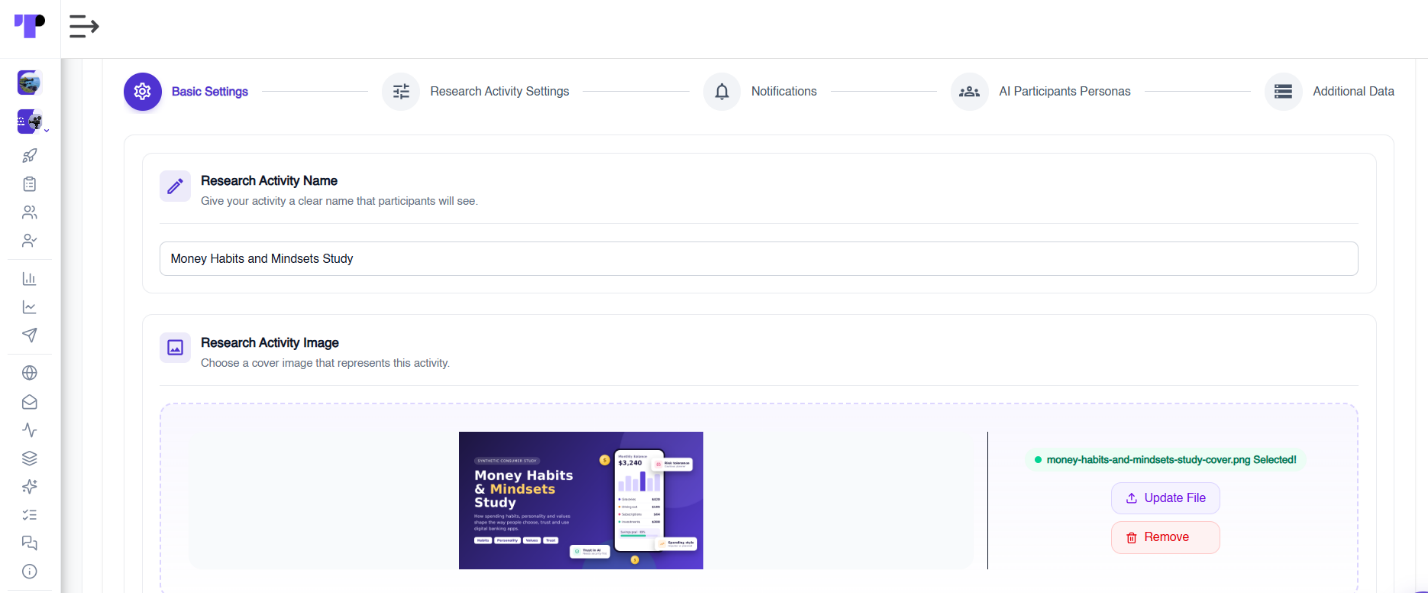
Start by creating a synthetic activity and adding the study name and cover image in Basic Settings. For our Money Habits and Mindsets Study, we explored how spending habits, personality and values shape the way people choose and trust a new budgeting and investing app.
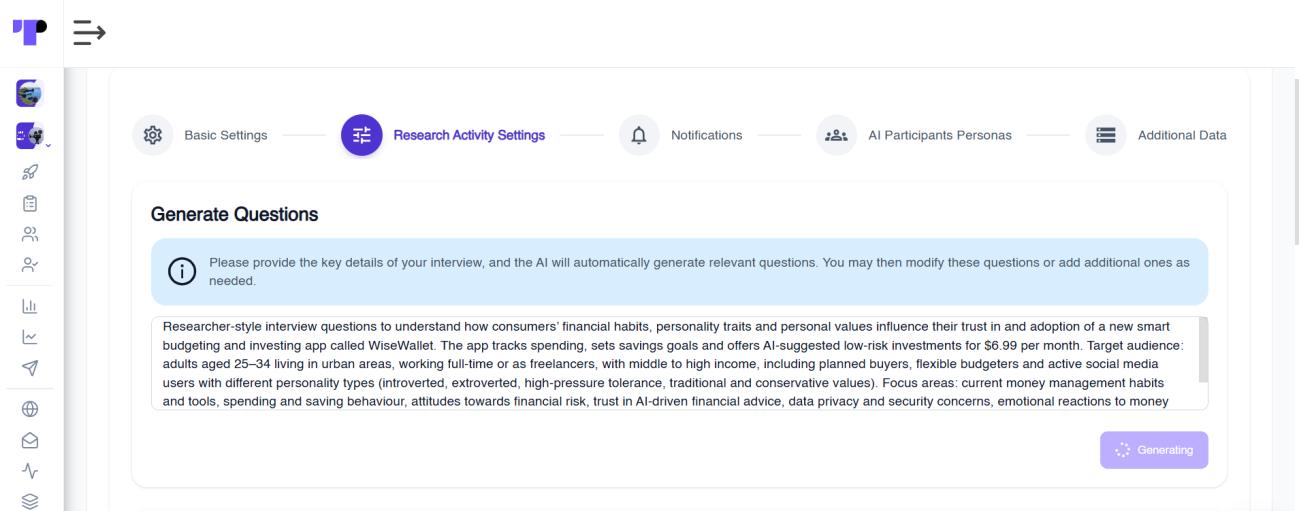
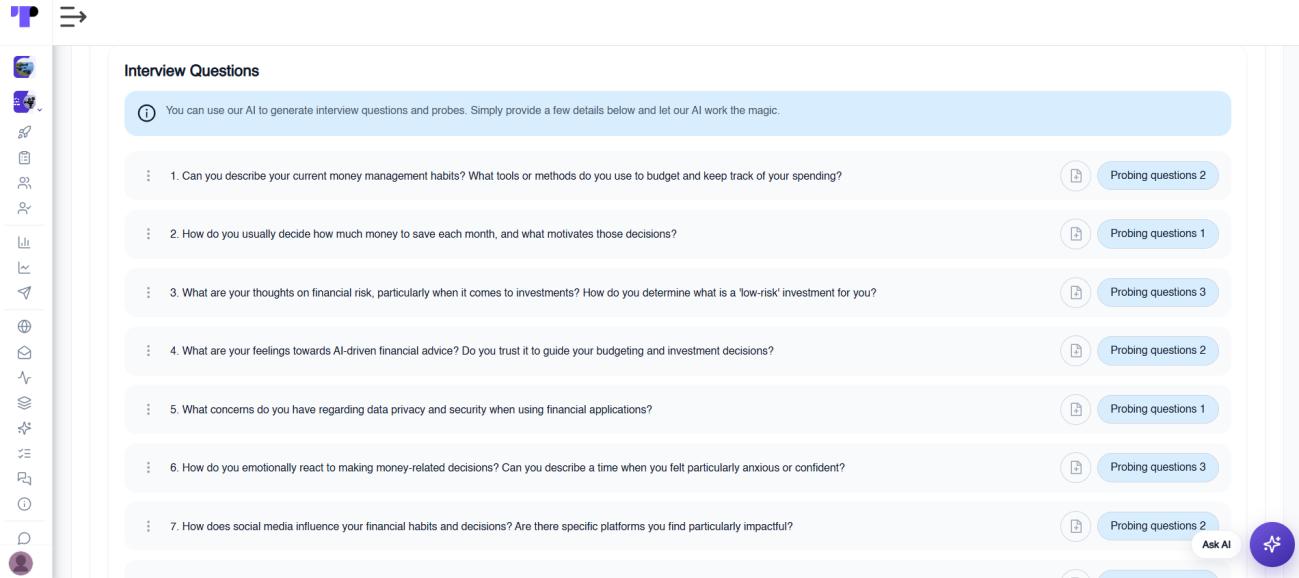
Next, add the research questions in Research Activity Settings. Researchers can describe the study, audience and focus areas in plain language, and AI generates researcher-style questions with probes, just like an AI-moderated interview.
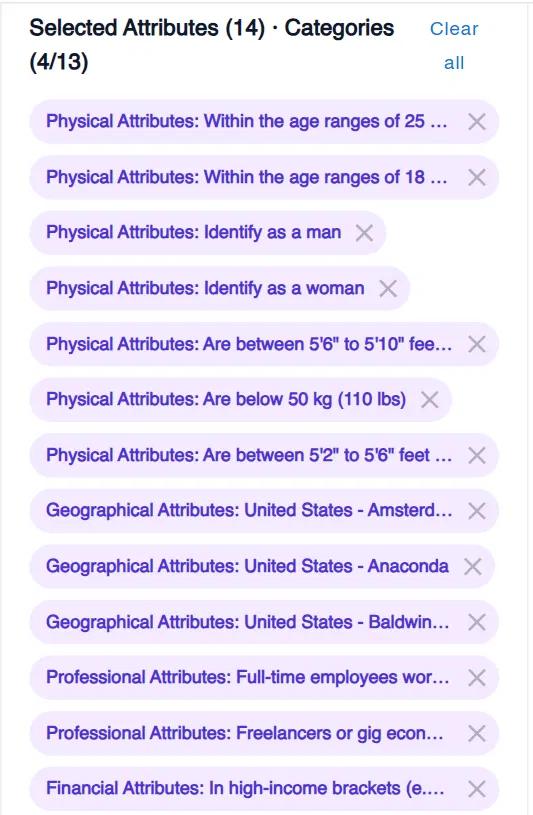
Step 2: Build the Demographic Foundation
Define who the consumers are by selecting attributes such as age, gender, location, employment type and income level. This keeps the personas aligned with the urban, working audience the app is designed for.
Step 3: Add Behavioural Attributes
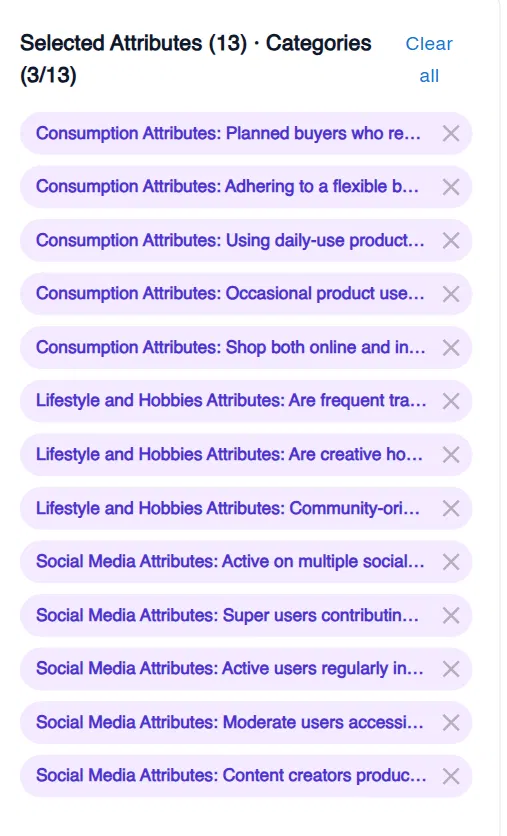
Add how the consumers act. We selected planned buyers, flexible budgets, online and in-store shopping, frequent travel, community-oriented lifestyles and different levels of social media use, from moderate users to content creators.
Step 4: Add Psychological Attributes
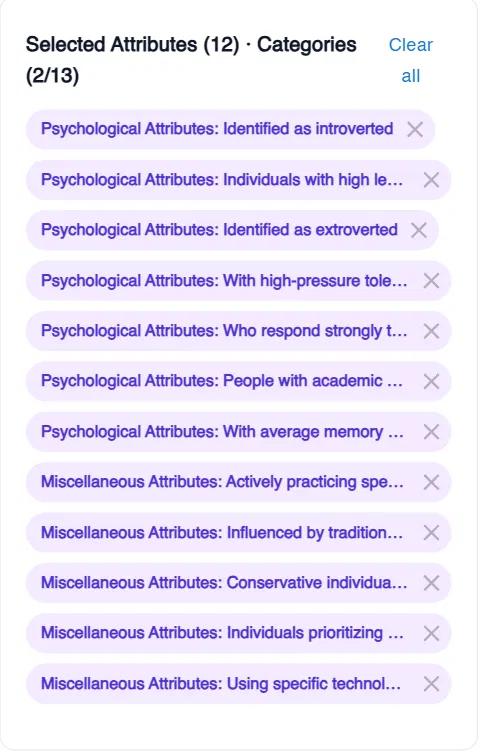
Add why they decide. We included introverted and extroverted personalities, high-pressure tolerance, strong emotional responses, and values such as traditional and conservative views. These traits shape the reasoning behind every answer, especially on risk and trust.
Step 5: Add Study Data for More Accurate Responses
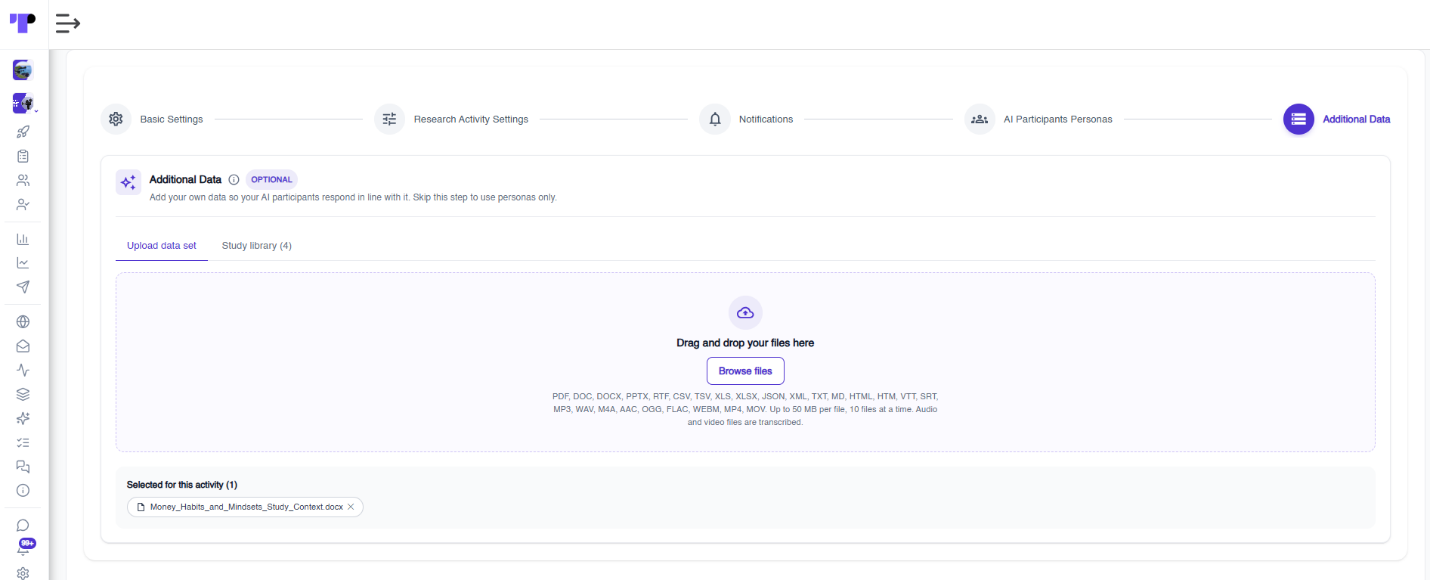
To make answers more accurate, researchers can upload their own data, such as product briefs, past survey results or customer feedback. We added a study context file describing the app, its pricing, security promises and the market background, so the AI personas respond in line with the real research scenario. Learn more about how synthetic data works.
How Does AI Turn Attributes Into a Consistent Persona?
AI combines all the selected traits into one complete profile and keeps each persona in character across every question. Each AI persona answers based on its own mix of habits, personality and values, and stays consistent even during follow-up probes. Researchers can then explore these responses with AI-powered insights.
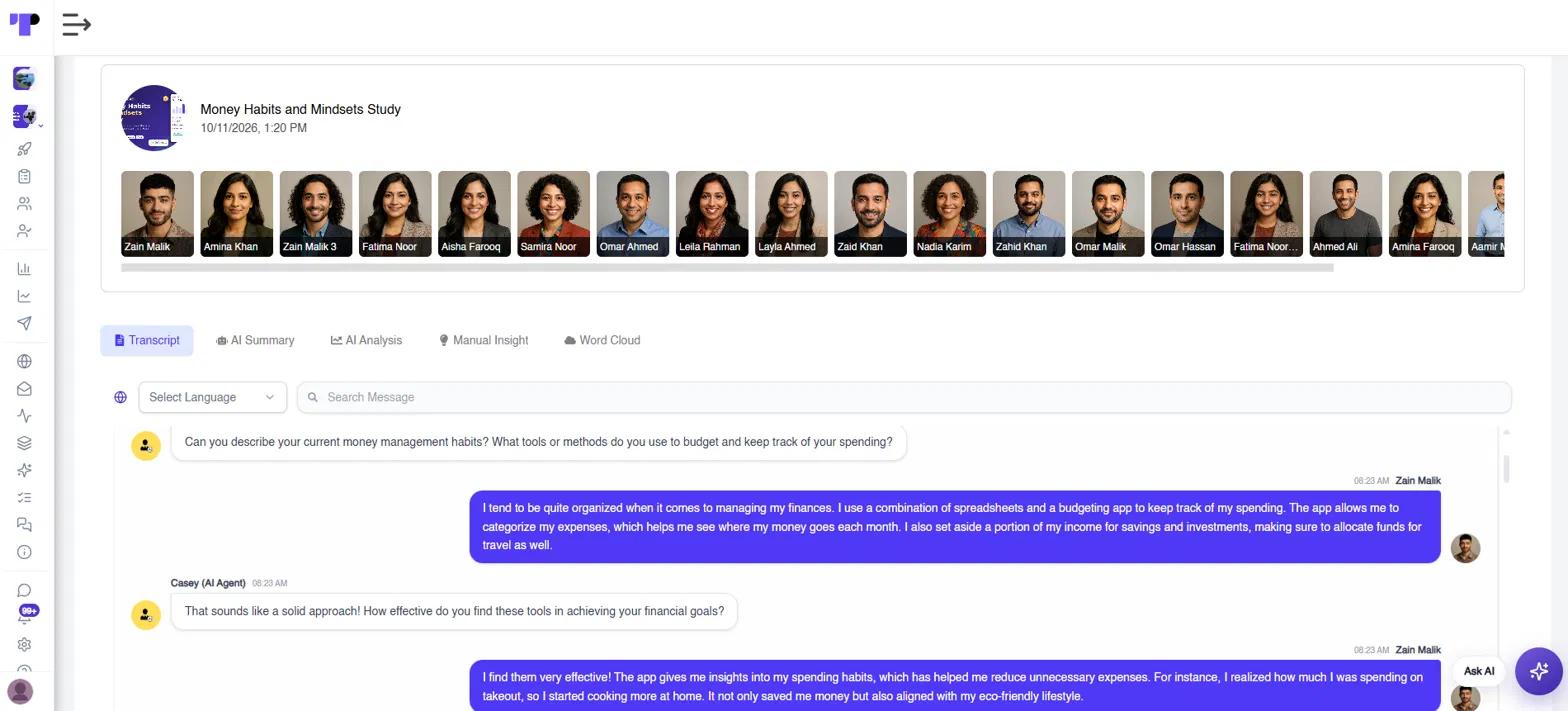
Same Demographics, Different Minds: What the Results Revealed
All the AI personas in our study shared a similar demographic profile: urban adults aged 25–34 with middle to high income. On paper, they looked like one consumer group. Yet their habits, personalities and values led them to very different decisions about money, risk and new technology. Here is what AI-powered data analysis revealed when we went beyond demographics.
Study at a glance
- Study
- Money Habits and Mindsets Study, a synthetic AI interview on Terapage about trust in and adoption of a budgeting and investing app.
- Participants
- 20 AI personas: 8 male, 8 female and 4 other, all urban adults aged 25–34 with middle to high income.
- Attributes
- Demographic, behavioural and psychological attributes selected from 13 categories, plus an uploaded study context file.
- Analysis
- Demographic distribution, AI summary, sentiment analysis, quotes analysis, taxonomies and Talk to Your Data.
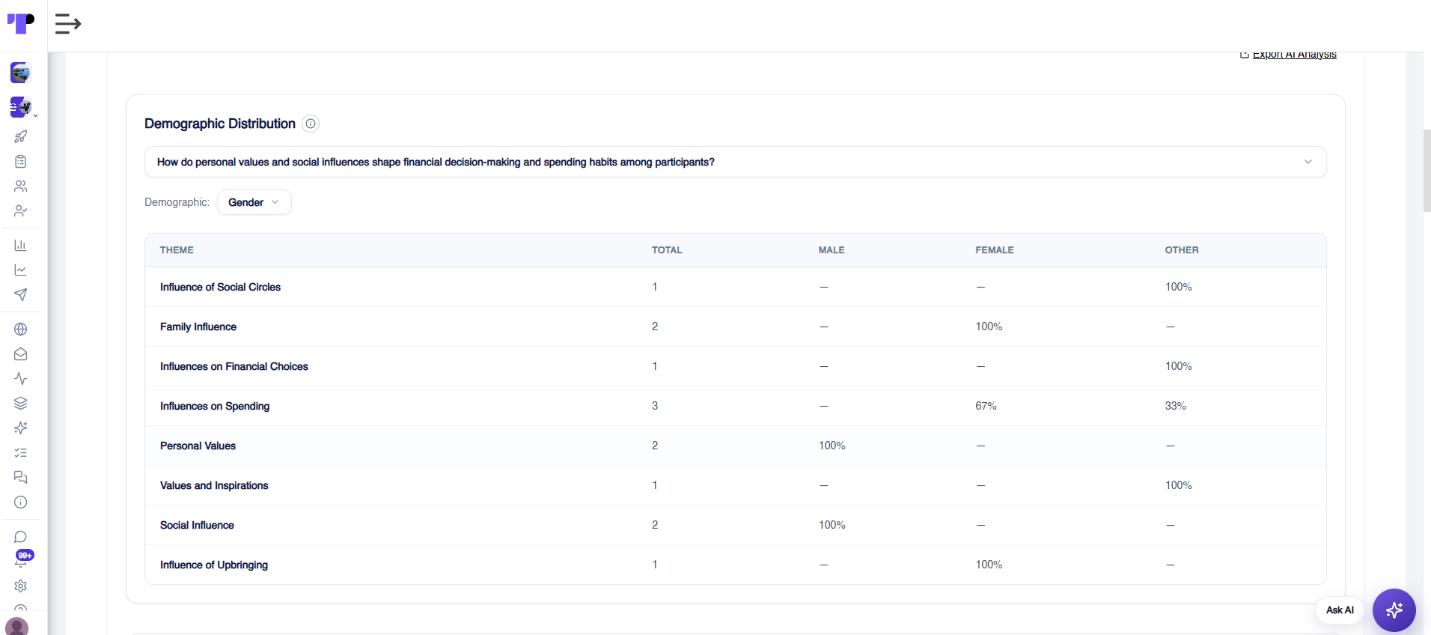
1. How Psychological Attributes Split Personas With the Same Demographics
The AI summary shows exactly where demographics stop explaining behaviour. Personas agreed on habits: most used budgeting apps to stay organised and valued sustainability. They split on mindset: cautious, conservative personas chose low-risk investments, while others called themselves “a bit of a calculated risk-taker.” Same age, same income, opposite decisions, all driven by personality and risk tolerance.
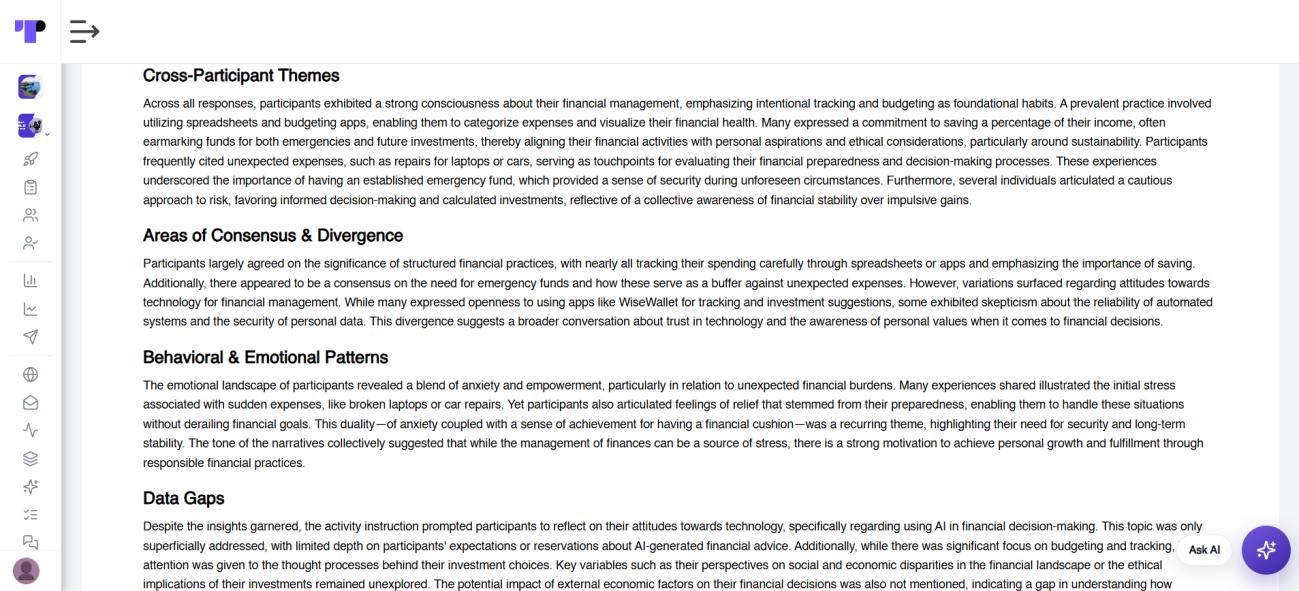
2. How Personality Shapes the Emotional Side of Money Decisions
Personas didn’t just think differently about money, they felt differently about it. Cautious and analytical mindsets, identified through AI sentiment analysis, clearly outweighed confident ones, even though every persona had a similar income. This is the psychological layer in action: personality, not earnings, decided how comfortable each persona felt about financial choices.
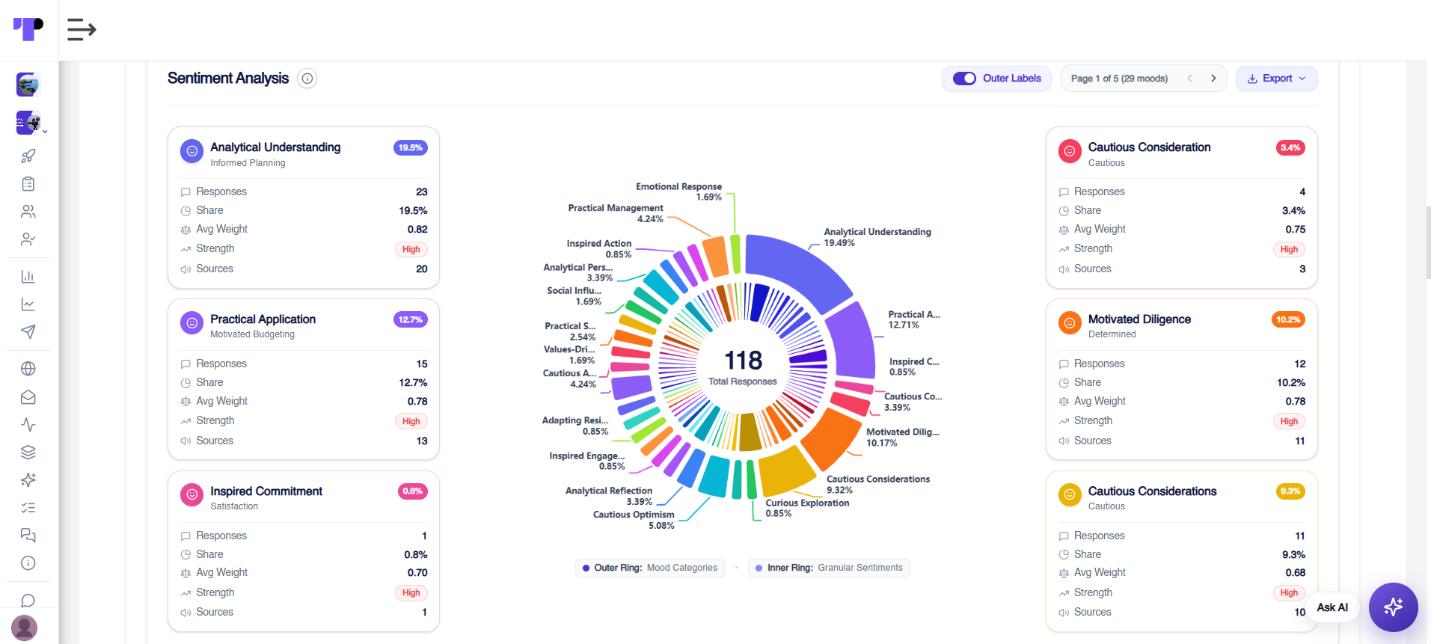
3. Why Values and Social Influence Matter as Much as Income
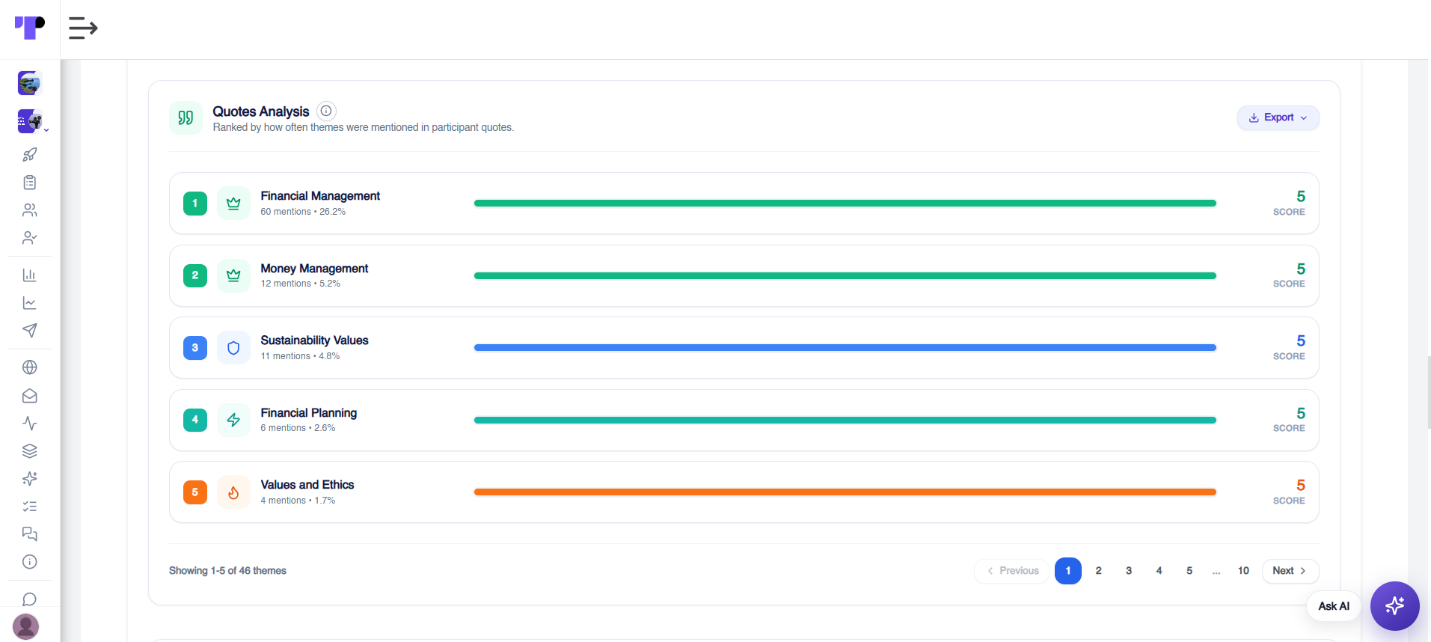
When personas explained their decisions, they talked about values, emotions and social media as often as they talked about money management. Income never appeared as a key theme. This shows that behavioural and psychological drivers, such as what people believe in and who influences them, shape financial choices far more than demographics.
4. The Behavioural and Psychological Signals Behind Every Decision
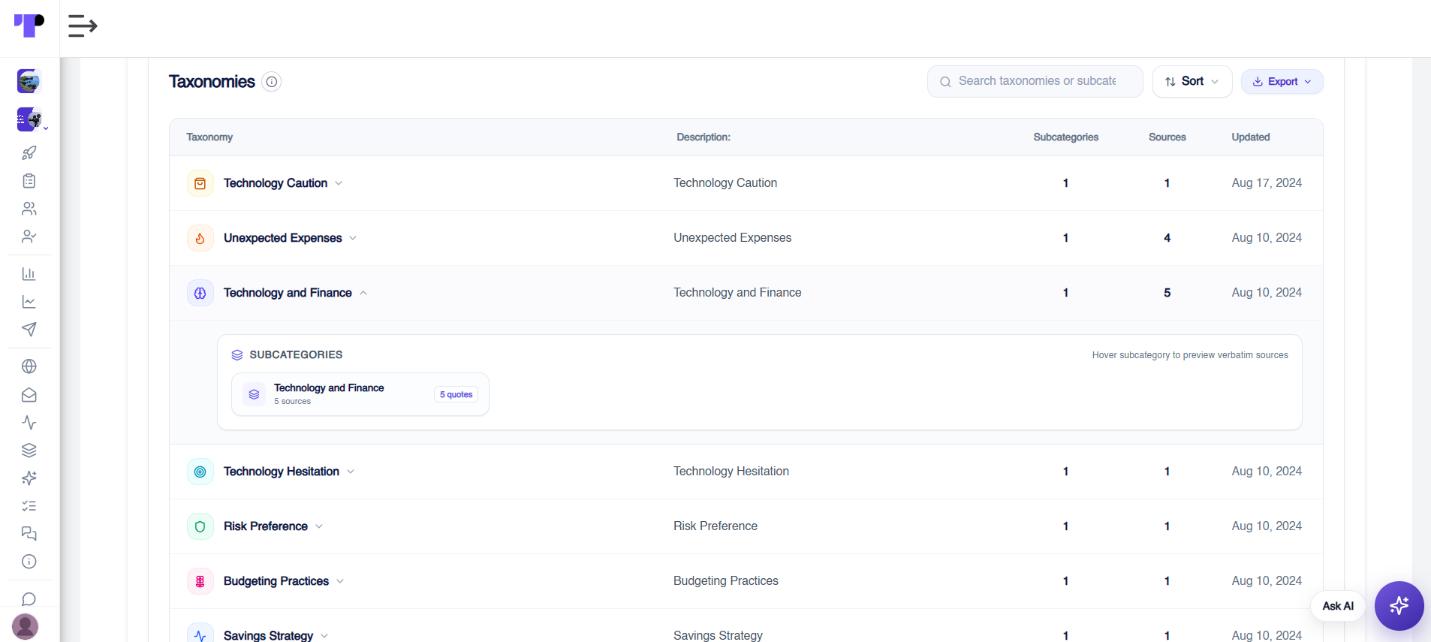
Grouping the responses revealed the hidden drivers behind each persona’s choices: anxiety vs emotional calmness, social media influence vs scepticism towards online advice, data privacy concerns, community influence and different approaches to saving and investing. None of these can be seen in a demographic profile, yet each one changes how a consumer responds to a product.
5. Do Personality, Habits and Values Decide Trust in AI?
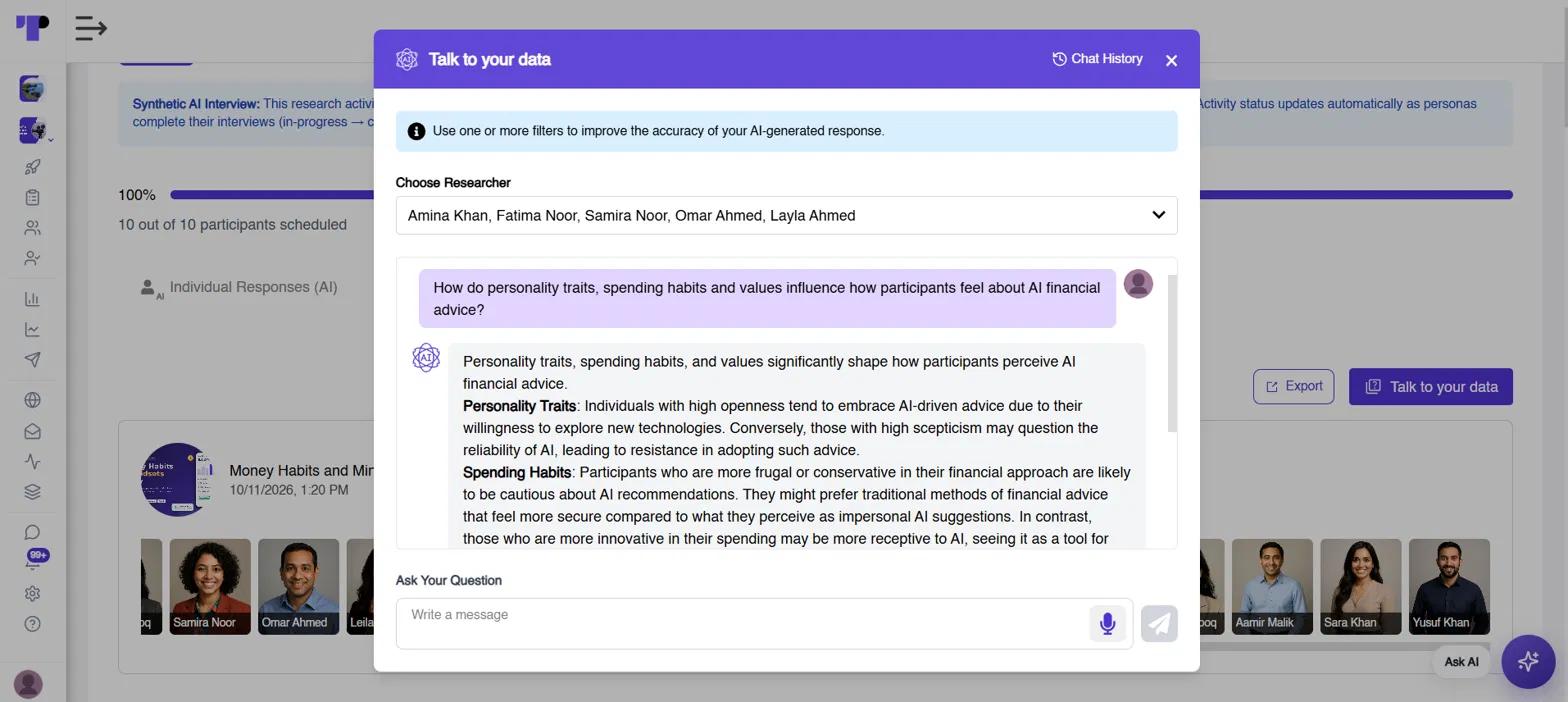
Yes. Open, tech-curious personas embraced AI-driven financial advice, while sceptical personas questioned its reliability. Frugal and conservative spenders preferred traditional advice that felt more secure, while innovative spenders saw AI as a helpful tool. For a brand launching a finance app, this means one demographic segment needs two different messages: innovation for one group, and security and control for the other.
Beyond Demographics in Practice: Where Behavioural and Psychological Personas Add Value
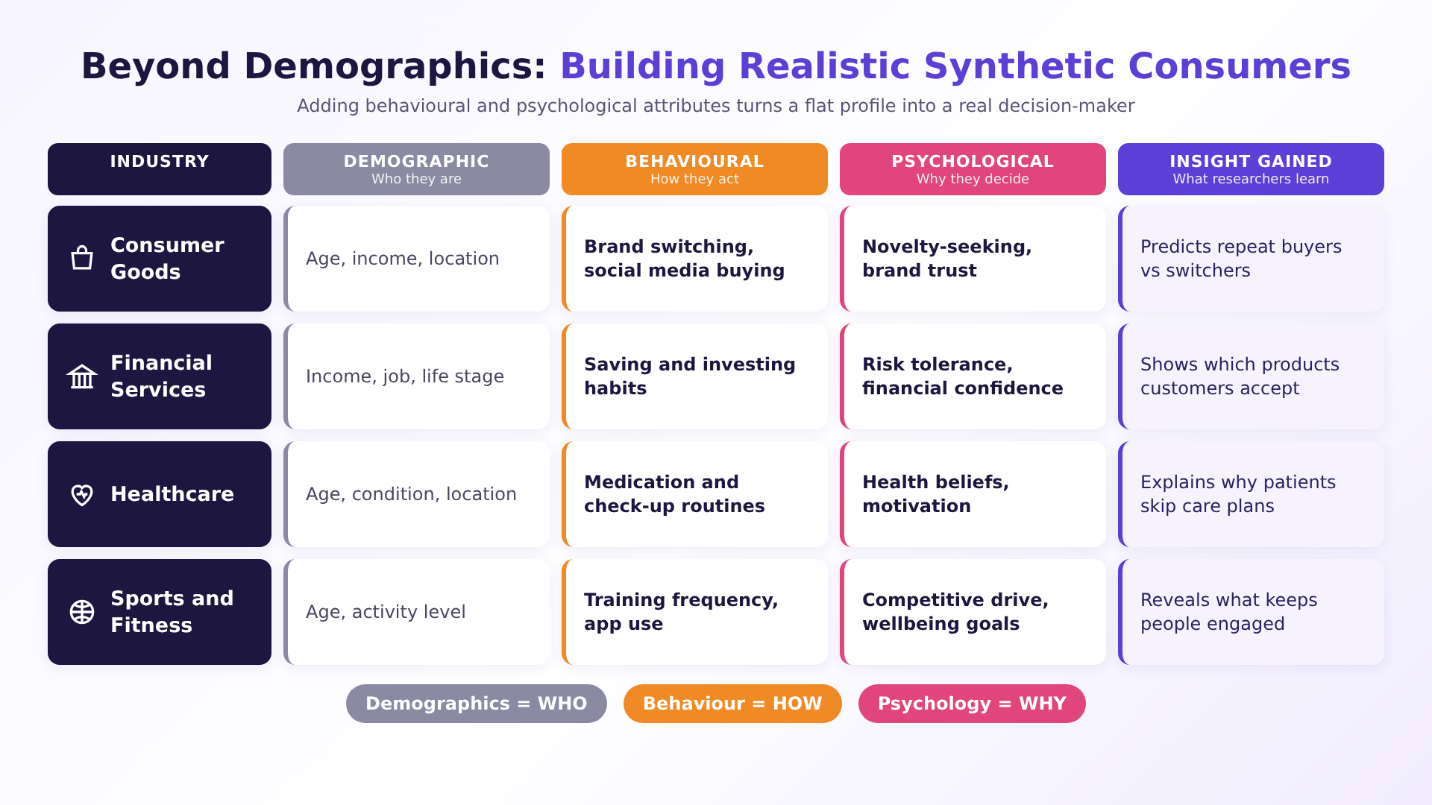
Going beyond demographics matters wherever people with the same profile make different choices. In consumer goods, it shows who stays loyal and who switches. In financial services, it reveals how risk tolerance shapes trust. In healthcare, it explains why patients follow or skip care plans, and in sports and psychology, it uncovers what keeps people motivated. These are the core questions of behavioural studies.
How to Keep Synthetic Consumers Realistic and Responsible
Behavioural and psychological attributes make synthetic consumers more realistic, but only when they are used carefully. These practices keep AI personas useful and trustworthy:
- Mix traits instead of stereotyping: combine contrasting attributes, such as introverted and extroverted personalities or planned and impulse buyers, so personas reflect real diversity rather than assumptions about a group.
- Ground personas in real context: upload product briefs, past research or customer feedback, as we did with our study context file, so answers stay tied to the real scenario.
- Protect sensitive data: run studies on a secure, compliant platform and follow best practices for safeguarding data privacy.
- Validate key findings with real people: treat synthetic results as a starting point, then confirm important decisions through hybrid research with real participants. Our framework for using synthetic data responsibly explains how.
Build Smarter Synthetic Consumers on Terapage
Demographics tell you who your audience is. Terapage helps you understand how they act and why they decide. Researchers can build synthetic consumers from 13 attribute categories, ground them with their own data, run AI-moderated interviews and turn every response into clear findings with AI-powered analysis and reporting.
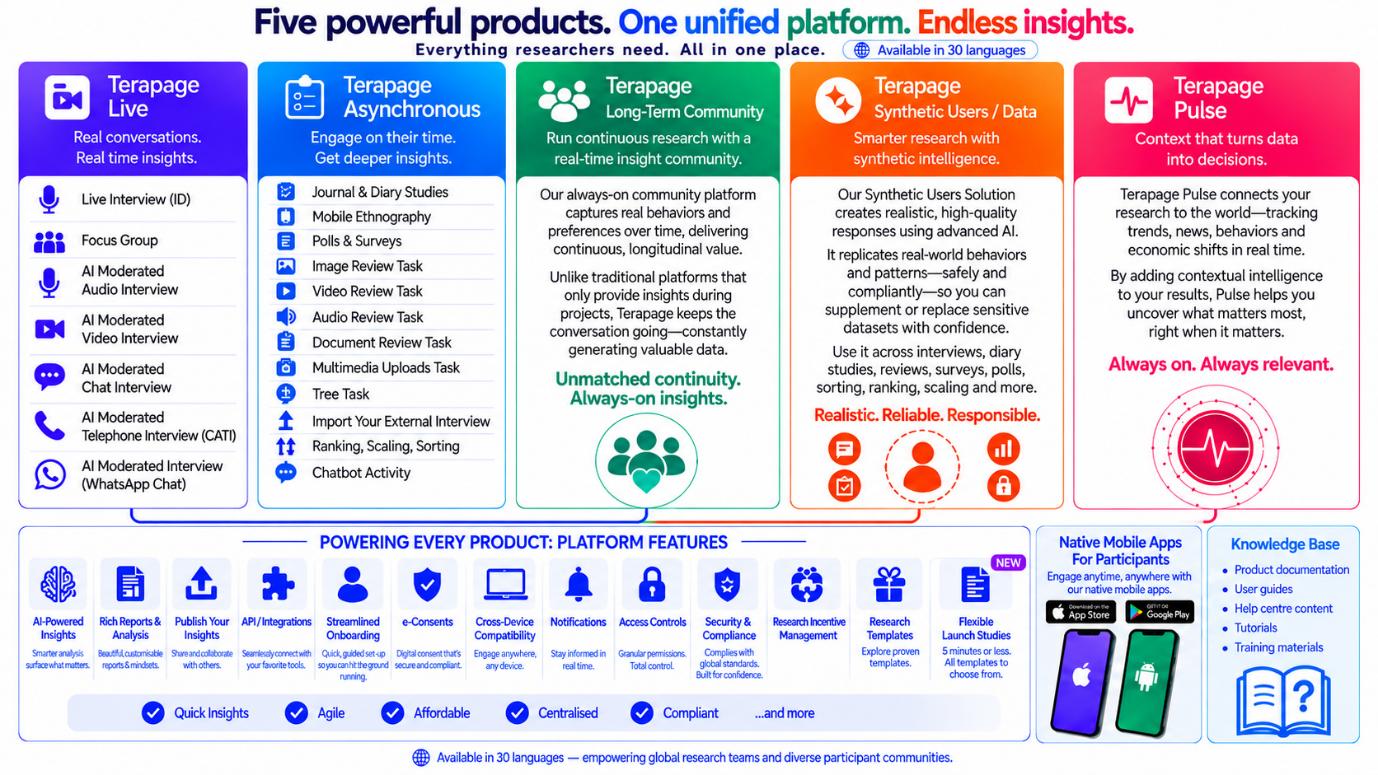
And when synthetic insights point the way, teams can move straight to real participants through live interviews, diary studies or a long-term insight community, all on one platform.
Ready to go beyond demographics?
Build your first synthetic consumer study on Terapage.